Logo Salus & Green

Megaflora has arrived in Venice

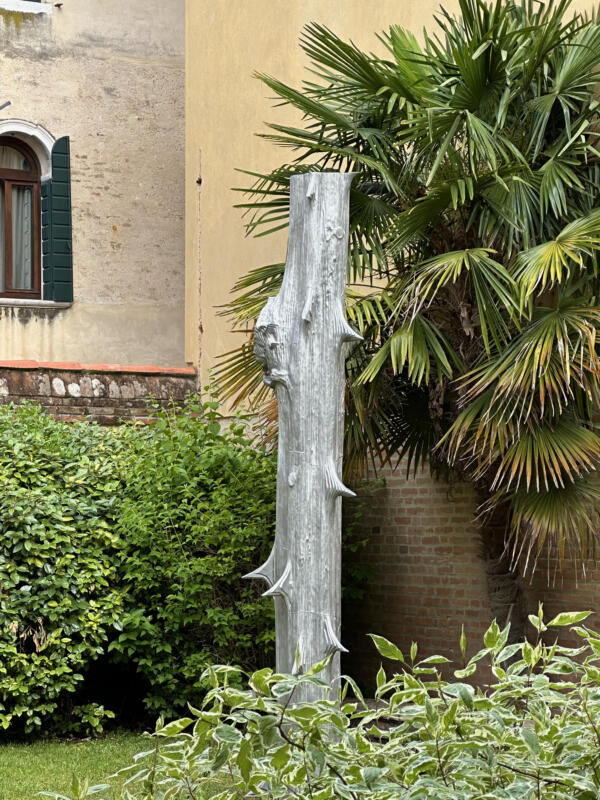
Through Sept. 28, the garden of the Giancarlo Ligabue Museum of Natural History is hosting a sculpture by British artist Alice Channer

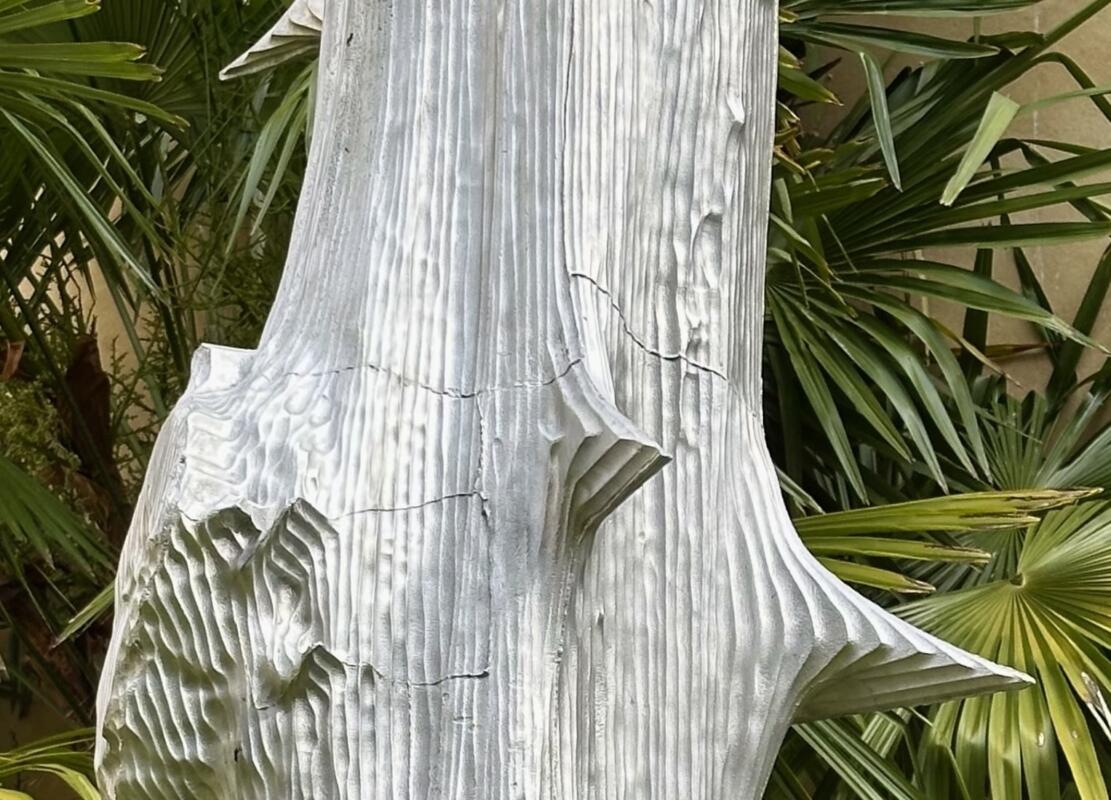
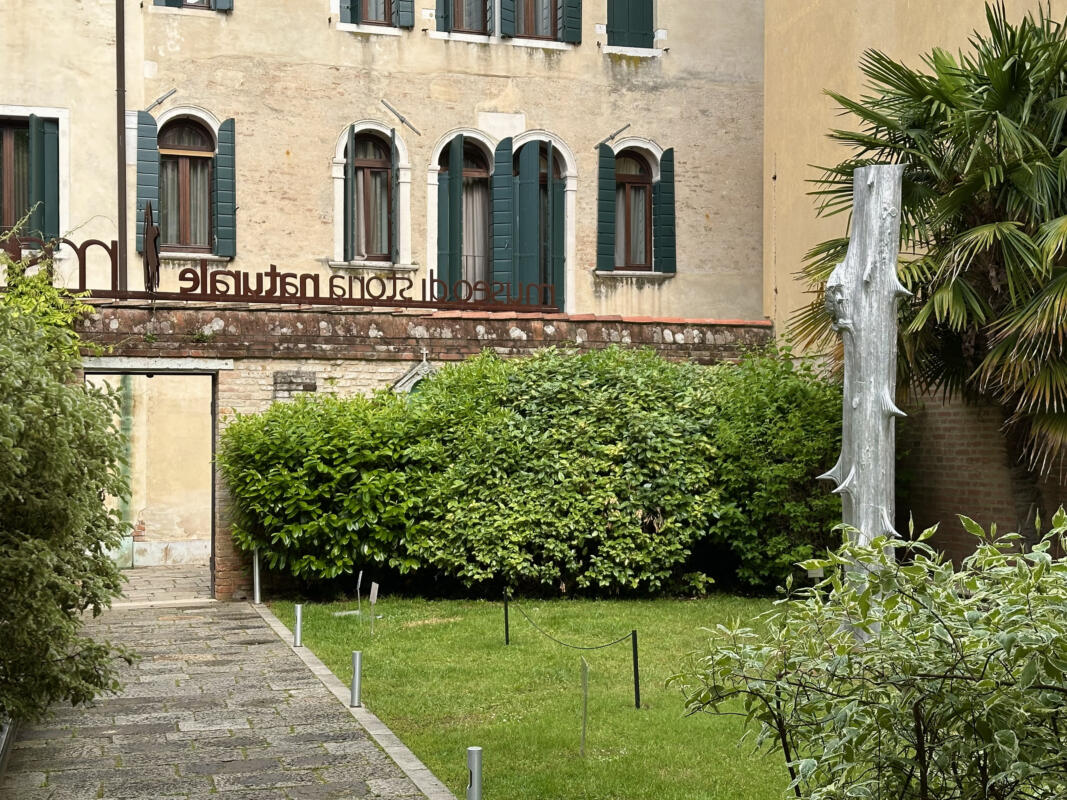
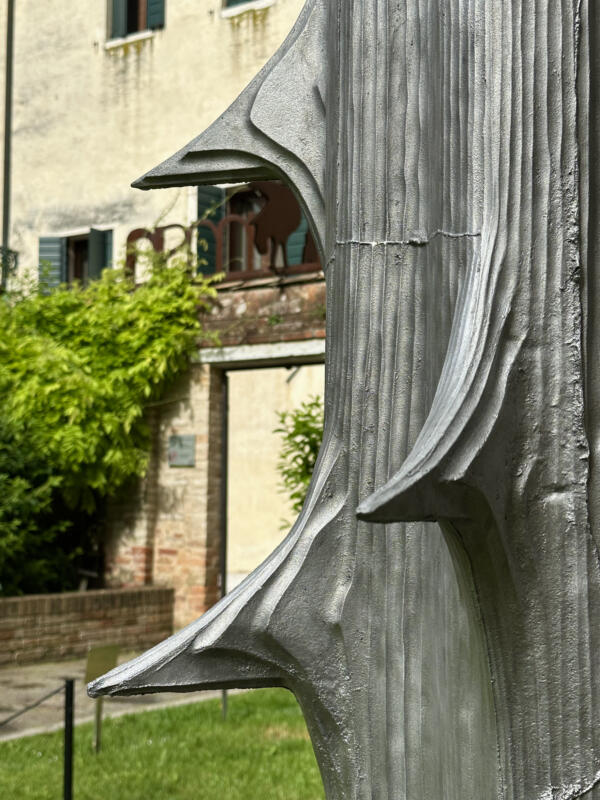
“Megaflora” has landed in the lagoon. Until Sept. 28, the garden of the Giancarlo Ligabue Museum of Natural History hosts the sculpture by British artist Alice Channer. Made with a casting of shiny aluminum sand from a 3-D scan, the work originates from the digital manipulation of a common plant element and ends up transforming into a metallic hybrid. Exhibited en plein air for the first time, following its success at the Royal Academy of London’s Summer Exhibition 2022, “Megaflora” measures itself against the lagoon context and presents itself as a point of contact between the museum’s scientific collections and contemporary artistic imagery. “In its placement among fossils, minerals, botanical and zoological collections, the work dialogues with an encyclopedic knowledge centered on the natural world,” points out museum director Luca Mizzan, “it triggers a reflection on the transformation of matter, the preservation of the living and the role of artistic imagination in an age marked by ecological crisis and technological dominance.”

Between nature and artifice

Channer’s creative process has always been on the border between nature and artifice. “Rather than moving toward direct representations of natural phenomena, his work seems to give rise to an alternative reality, generated by materials and creative processes that compete with organic ones,” points out curator Harry Woodlock, “his project can be read as a representation of change, attuned to the transformations the environment has undergone or to which it has adapted.” Through sculptures made of metal, resin or synthetic stone, Channer investigates the dynamics of transformation and vulnerability, but also the mechanisms of protection and adaptation. With“Megaflora” he uses form to emphasize the violence of change. “The mechanical processes and physical transformation generate an awareness of the works’ existence in time and their coming into being,” adds art historian Jacopo Galimberti, “one experiences time through fabrication, construction and casting. There is a kind of empathy that allows the viewer to feel connected to what the materials have gone through to arrive at their present state.”
Alice Channer

Channer was born in Oxford, UK, in 1977. She lives and works on the outskirts of London. She graduated from Goldsmiths College with a bachelor’s degree in Fine Arts, the Royal College of Art in London with a master’s degree in Sculpture, and the University of Sussex with a bachelor’s degree in English Literature. He has exhibited his work internationally in numerous solo and group institutional exhibitions, including the Kunsthalle in Hamburg, Tate Britain in London and the Fridericianum in Kassel. He recently presented the retrospective “Heavy Metals / Silk Cut” at the Kunstmuseum and Kunsthalle Appenzell, accompanied by his first monographic catalog. “Megaflora” is the second installation Channer is exhibiting at the Fondazione Musei Civici di Venezia, following the inclusion of four of his works in the exhibition “Breathless” hosted at the Galleria Internazionale d’Arte Moderna di Ca’ Pesaro in 2019. In 2013, he participated in Massimiliano Gioni’s fifty-fifth Venice Biennale “The Encyclopedic Palace.”

The forest of Venice

The installation is accompanied by a new publication produced with contributions from Mizzan, curator Harry Woodlock, art historian and researcher at the Iuav University of Venice Jacopo Galimberti and art writer and presenter Louisa Buck. “Despite its arboreal presence, “Megaflora” originated from a small bramble, a thorny twig ten centimeters long, enlarged to become an autonomous sculptural form. For Venetian viewers, the figure might immediately call to mind the millions of wooden poles on which the city is built,” Galimberti notes, “logs are preserved through a complex combination of engineering and an ecosystem composed of water and mud. Although bacteria act by degrading the wood below the surface, the oxygen-free environment dramatically slows this process. L and things change, but they are more or less in a state of homeostasis. “‘Megaflora’ expands Channer’s artistic research and extends it to the urban environment and the deep time of the invisible processes that have passed through the trees selected for this engineering function for 1,600 years.”

Author:

Iscriviti a GREEN&SALUS e non perderti nessun aggiornamento, ti invieremo 1 volta a settimana i nuovi articoli!