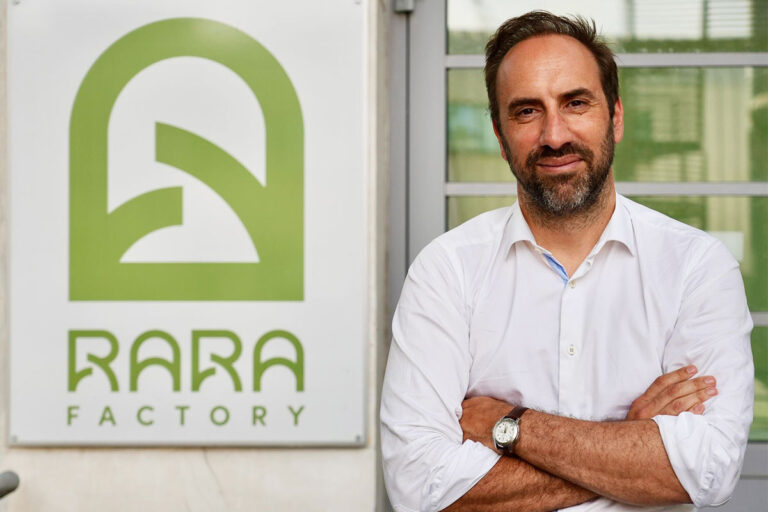
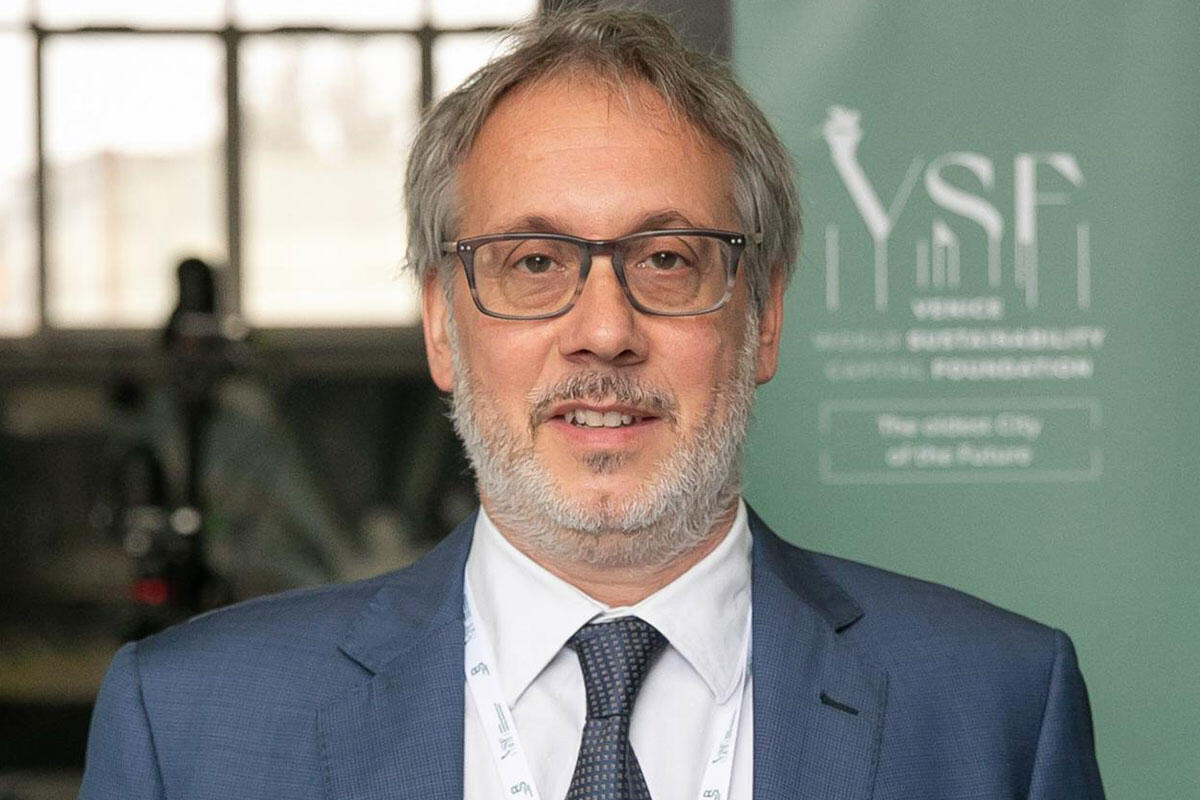
“Complexity needs a shared approach, but a crucial aspect with which to deal with it is time andorganization; our foundation itself deals with many issues but we did not start with all of them at once, but worked by individual areas to achieve organic growth.” Word from Alessandro Costa, in his second term as Director General of the Venice Foundation World Capital of Sustainability for the three-year period 2025-2027. “Our goals remain to be an accelerator of initiatives by bringing together different realities that would not otherwise have ways of working together, with the aim of finding models that can be applied in a unique city like Venice, in the entire territory and beyond. Working here not only gives us international reach but shows the world that solutions that are possible in the lagoon, can be applied anywhere ».
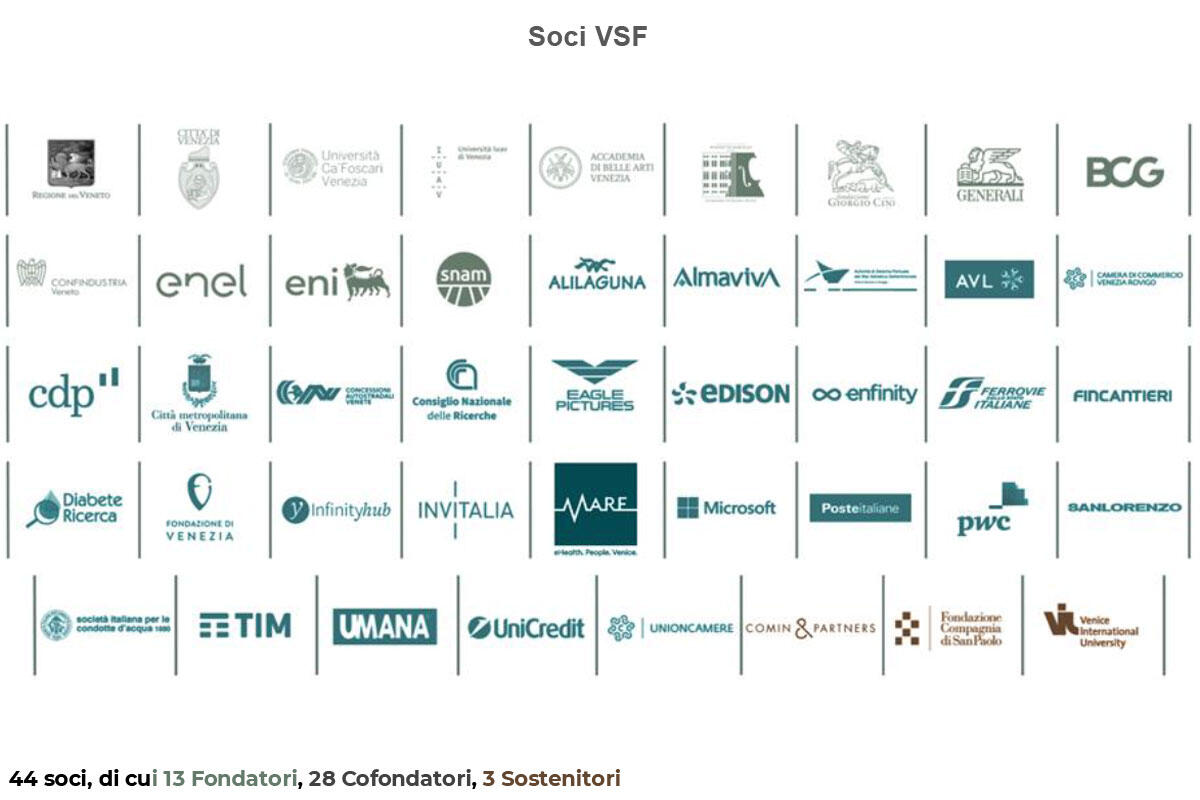
In fact, the Foundation presents itself with unique model at the level of innovation, strategy and quality of partnership with 44 partners among institutions such as the Municipality of Venice, Veneto Region, Metropolitan City, Iuav, Ca’ Foscari, Academy of Fine Arts, Benedetto Marcello Conservatory, Giorgio Cini Foundation, Confindustria, Unioncamere, Cassa Depositi Prestiti, Invitalia and companies such as Boston Consulting Group, Enel, Eni, Microsoft, PwC, Tim, Trenitalia, Poste Italiane, Unicredit, Umana. This network unites such diverse entities in the common interest of working on issues related to Venice and its entire territory beyond the Historic Center to the entire Veneto region. The approach is to create models of 360° integrated sustainability that takes into account environmental, economic, social and cultural impacts.
“The Foundation’s goals are set by the Governing Board, which sets guidelines that are then turned into activity plans, the main ones for the next three years being partnerships, best practices, tourism andinnovation,” the Director General explains. at the level of consolidating the partnership, which already represents well the cross-section of stakeholders in the area, we want to extend its membership to be as representative as possible with respect to the theme of sustainable development, to foster new ideas and projects to be concretized. We then want to deepen and promote good practices with a positive implication, as we have been commissioned by the City of Venice to represent a success story of adaptation and climate resilience at the UN Office for Disaster Risk Reduction (UNDRR) for the coastal cities network “Making cities resilient” with the MOSE experience.”
“With regard to tourism, we are studying the characteristics of this phenomenon by examining who frequents Venice , not limiting our gaze to the historic island,” Costa adds. we are interested in theentire vast area that also includes commuter flows, in addition to the tens of millions of tourists and residents, so we have identified a starting basin of 900,000 “city users” from at least 15 municipalities in the Metropolitan City to which Mogliano Veneto is added. Our task is to contribute to the understanding of all flows affecting Venice and to find solutions for optimal management, working with the Region and the Municipality collecting and studying experiences and best practices from other realities, which we also address through the format of the Sustainability Biennial. Then at the level of innovation and environmental, energy, industrial and logistics transition we offer spaces for analysis, meeting and reflection, as done for the regional space economy.”
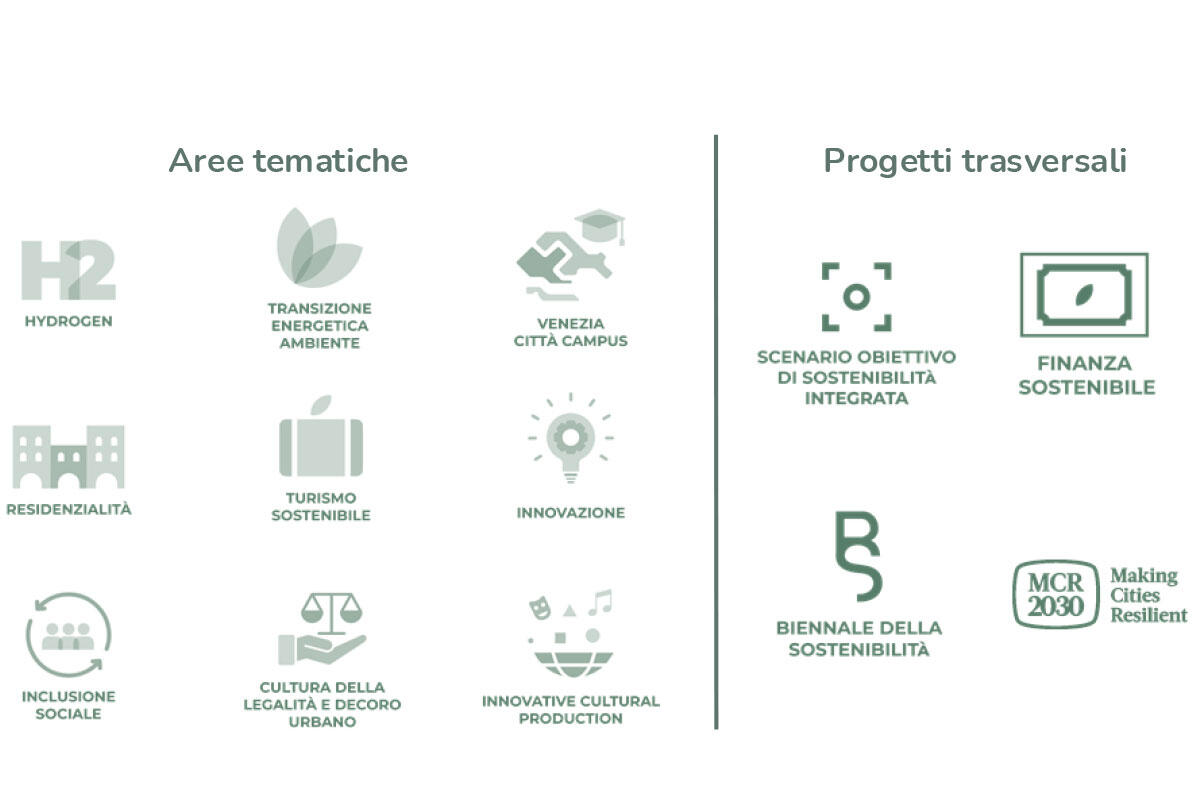
«For us, there remains the great issue of being able to propose a model, with a view to diversification, that combines an economic basis with one of resilience of our territory, starting from the tradition of what we define as the “knowledge cluster” accumulated in Venice thanks to the heritage of academic, cultural and entrepreneurial knowledge – explains the Director – we want to study and refine a set of strategies, enhancing these characteristics, that defines an urban transformation that accompanies a development of the labor market with an international impact, where the nodal point is the combination of training, innovation and research by joining forces between institutions and companies, also reconverting urban spaces for this purpose such as the operation we are doing at the Arsenal with the creation of the Polo del Mare, an operation carried out with the Navy on coastal development issues together with CNR, Ca’ Foscari and Iuav».
“To safeguard the lagoon, the objective path is to achieve a balance between tourism, industry and ports, academia and culture, to overcome the approach of monocultures that do not dialogue with each other ,” Costa clarifies. This is the only way to best address challenges such as post-MOSE, the use of which we are promoting today and is adequate to current technology, but which will not be eternal or the issue of converting businesses in the area to the recovery of critical materials, there are already about 300 ready to change their skin. These are all aspects that we need to bring out also by attracting outside investment, demonstrating that Venice and its lagoon are resilient and looking to the future because they want to survive the challenges that the environment and the economy place before us, but following stringent principles of sustainable development. However, our entity was not created for self-praise, but to draw and define a horizon toward which to strive by creating a place also for international discussion and design of sustainable models, because if it can work in such a peculiar place, models are replicable everywhere ».
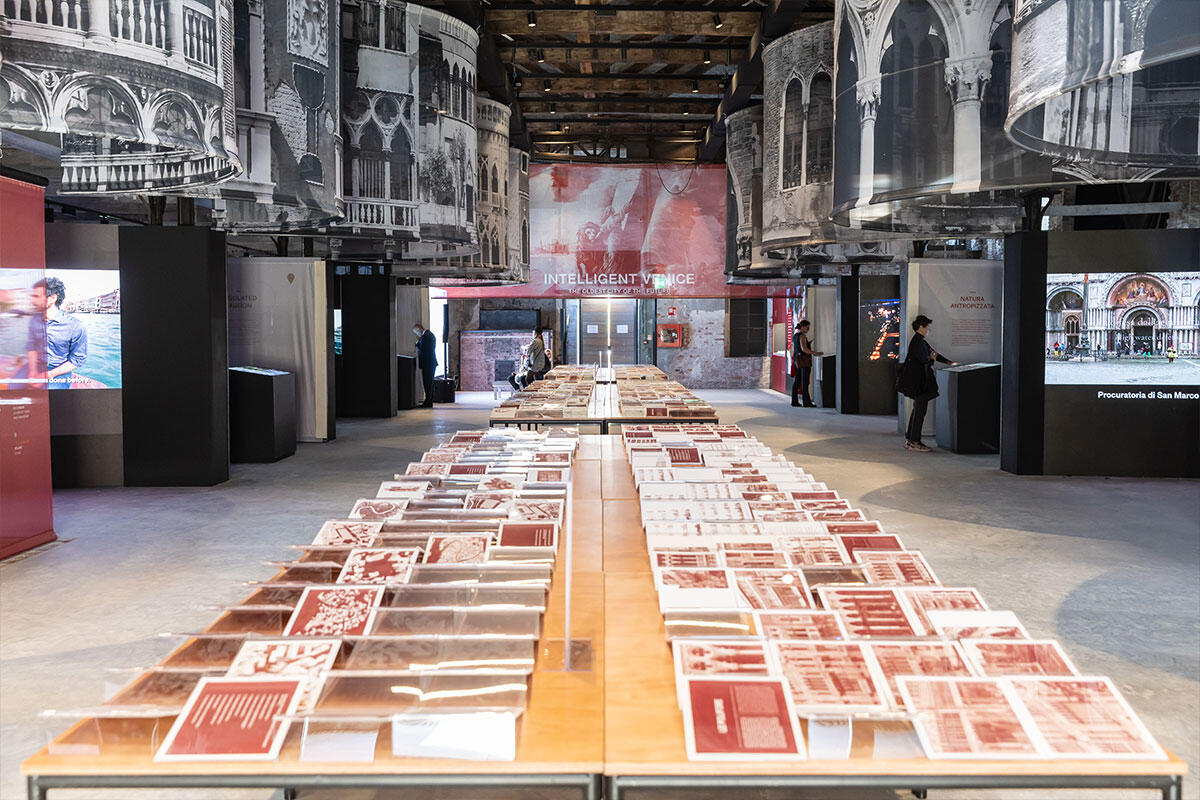
“We are fortunate to have an open-air laboratory in Venice that is unique in size and environmental peculiarities,” the DG premised. it is a tendentially closed environment where processes are measurable so if a project succeeds in a place where a historic city coexists with an industrial site and the environment blends with cultural heritage, we are able to define pathways that are valid for the whole world. With this spirit we organize the Sustainability Biennial, which has become one of our main events where we turn Venice into a center of attraction to gather experiences, exchange information and compare good practices. The points we want to continue to focus on are the development of renewable energy, energy efficiency, and sustainable mobility. Venice for us must be a protagonist in this proposal for change, we are communicating this through the exhibition “Intelligent Venice” and soon we will be engaged in an international conference on urban resilience against climate change with focus on coastal cities ».
“When asked how I see the future of Venice,” Costa replied. I envision a future where all the different stakeholders, both public and private, are able to team up, because in the face of great challenges to complex phenomena the only way is for all of us to work together. The specific role of the Foundation is to bring all these stakeholders together and make them dialogue. We do not have pre-constituted answers to phenomena such as tourism or MOSE, but let us give ourselves the correct time to experiment and find them, operations for example such as the access fee have proven to be useful at least to understand who uses and in what way the city, because without understanding it is impossible to even propose shared policies, finding a compromise between overturism and the vacuum experienced with Covid-19. On MOSE then it seems clear that the barriers will have to be closed increasingly, but there are hypotheses for studying flows with partial closures as well as proposals for logistical landings outside the inlets. In short, let us reason and experiment, making good use of the time we have to define truly shared and effective strategies for Venice to be a model of global sustainability.”
C.I.D. s.r.l. Società a Socio Unico – Casa editrice del settimanale Gente Veneta – CF e PI 02341300271 – REA: VE – 211669 – Capitale Sociale 31.000 euro i.v. – Dorsoduro,1 – 30123 Venezia
Iscriviti a GREEN&SALUS e non perderti nessun aggiornamento, ti invieremo 1 volta a settimana i nuovi articoli!