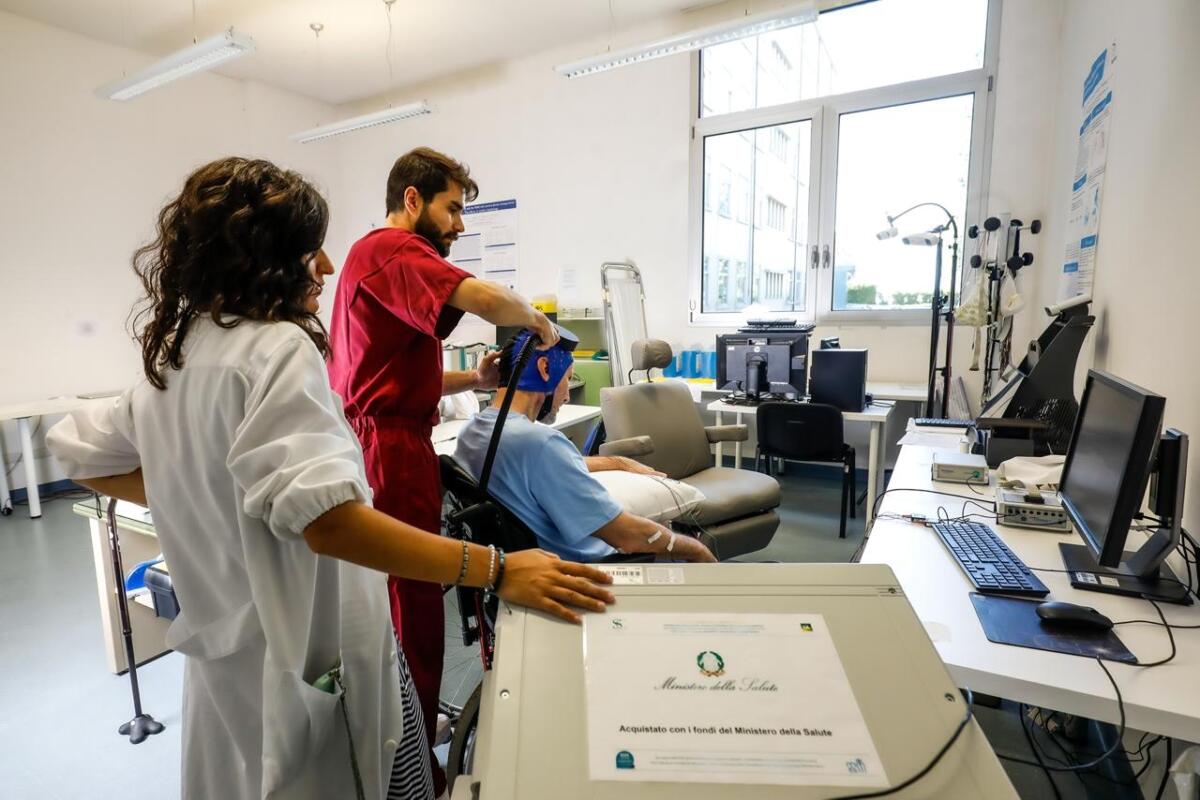
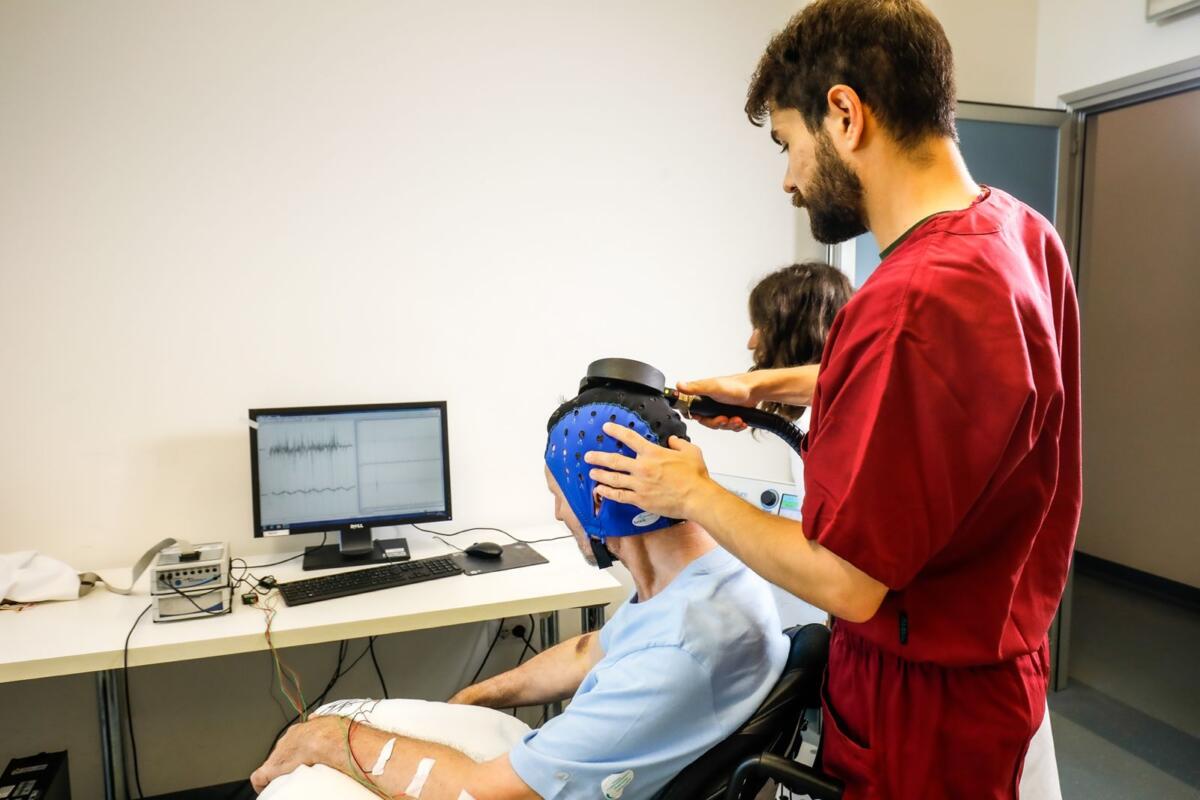
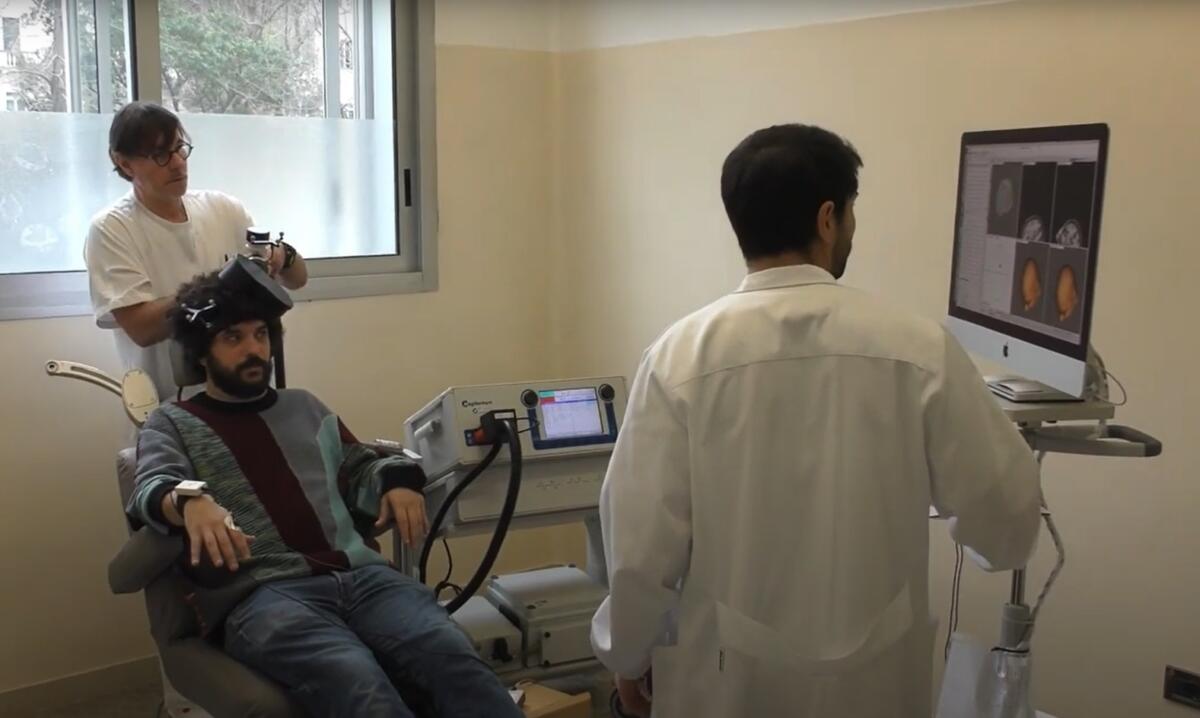
One of the most promising frontiers of modern medicine has arrived in Venice. “Neurostim,” the new state-of-the-art neurostimulation outpatient clinic for depression, addiction, and post-stroke and Parkinson’s rehabilitation, has been born at the San Camillo Hospital on Venice Lido. This is due to the first synergy put in place between Irccs San Camillo, a recognized excellence in neurorehabilitation, and San Raffaele Arcangelo Hospital (former Fatebenefratelli), both facilities now managed by Fondazione Villa Salus. Just the former Fatebenefratelli, where among the many services offered the alcology one is turning 40, was recently acquired by Villa Salus (read here). The new Neurostim outpatient clinic, a unique center for the synergy between research and clinic, was previewed on Wednesday 9 in the San Servolo Hall of the San Raffaele Archangel Hospital, where professionals from both facilities who will care for the outpatient clinic presented its specificities and potential. NeuroStim is an innovative project that brings to Venice the most advanced neuromodulation techniques, including repetitive Transcranial Magnetic Stimulation (rTMS): a noninvasive and painless technology that uses magnetic pulses to stimulate and activate specific brain areas. Depending on the pathology, there are in fact specific brain sites to stimulate, so as to incite deficit motor areas. – explains Dr. Sara Zago, neurophysiopathology technician, researcher and coordinator of the NeuroStim outpatient clinic – A treatment already approved by the FDA for resistant depression and obsessive-compulsive disorder, and now the subject of important scientific evidence for the treatment of addictions such as alcohol, drugs and smoking, chronic pain, Parkinson’s disease and in post-stroke rehabilitation,” she says, pointing out that the Neurostim outpatient clinic is distinguished by itsmultidisciplinary approach and the team’s decades of experience in treating addiction.

Each course of treatment is customized by a team of specialists-neurologists, neuropsychologists, researchers, and technicians-who integrate the latest scientific findings with careful clinical monitoring. Sessions, varying in length from 20 to 40 minutes, are modulated over 4 weeks according to the pathology being treated, with validated and safe protocols. The clinic operates under the supervision of a scientific committee of excellence, which includes experts from Neuroteam, an academic spin-off of the University of Palermo. “What is crucial is that patients who will use the service will be followed step by step during the course and also in the post-stimulation periods. “We are keen to offer a 360-degree service in which the patient does not feel alone, but can feel accompanied for every eventuality,” explained Dr. Claudia Ballarin, a neuropsychologist and psychotherapist at St. Raphael Archangel, instead, who offered to follow patients through a psychotherapy course during therapy. “It is especially useful to help complex patients who are multi-resistant to other treatments,” explains the neuropsychologist.” For patients who request the service, a neurological examination is immediately scheduledto assess their suitability for treatment. Epileptics, for example, cannot access it because they would risk having seizures. For anyone who then needs to access the Neurostim laboratory for treatment, a preferential channel will be activated to perform certain tests. In addition, each patient will be evaluated two months after the completion of the course.
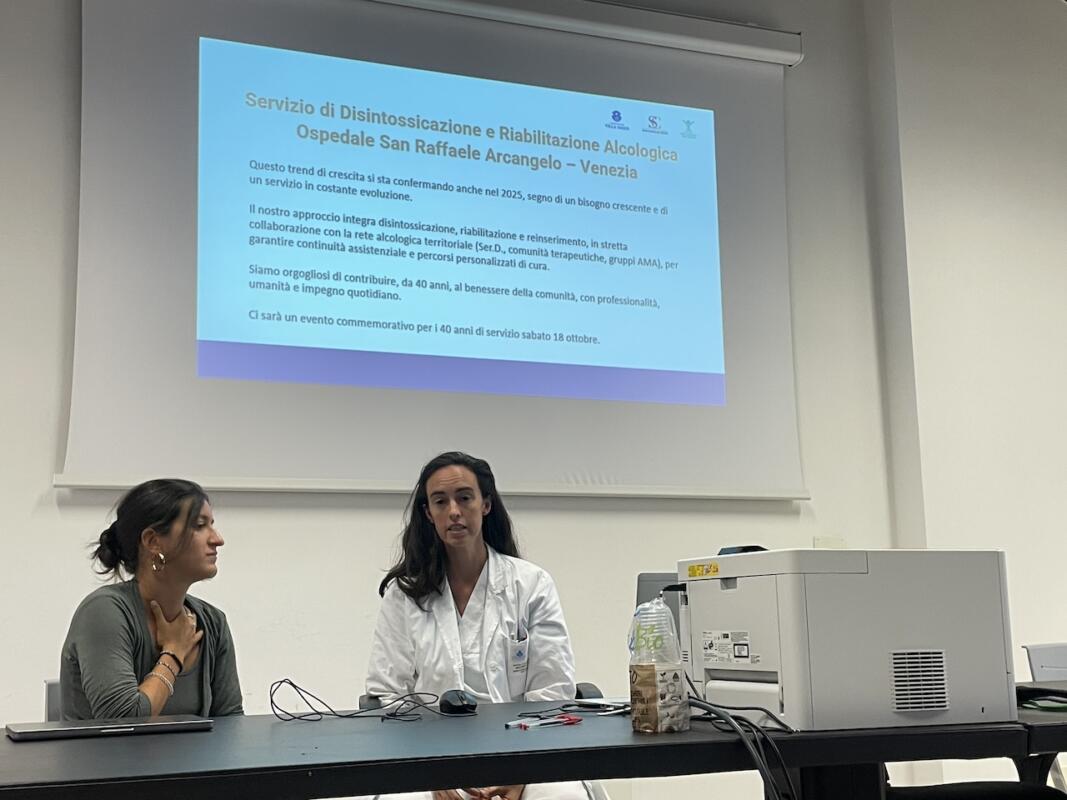
In particular, Neurostim will be useful in supporting patients at theformer Fatebenefratelli’s alcohological detoxification and rehabilitation service , which will celebrate 40 years of activity this year. “In recent years,” Ballarin continues, “it has become a point of reference for the entire regional territory and registers an increasing number of admissions. If in 2023 there were 102 admissions in the last year, in fact, they have grown to 172. Moreover, new since last year, in addition to the 15-day hospitalization , a day hospital service of another two to three weeks is also active. “For these patients, rTMS becomes an additional opportunity to make the cognitive areas that control pathological impulses more flexible and receptive. We take into account that those who come to us, in addition to alcohol dependence often also have multiple addictions or psychiatric problems.” In addition, rTMS is a viable alternative for patients who do not want to take medication or are drug-resistant, and it is also recommended in patients who relapse or struggle to start psychotherapy.”

The service, which has been present in Italy for years but has been lacking in the city, can only be booked privately. “It would be nice if one day public resources arrived to open it through the public service as well,” Zago then emphasizes, saying there is also the idea of soon opening a DC Electric Stimulation spin-off for the treatment of stuttering.“Neurostim is just the first of many new opportunities that as the Villa Salus Foundation we want to put in place by making the excellence of our hospital and research facilities dialogue. – explained CEO Mario Bassano- Our commitment to safeguarding the presence of the historic Venetian hospital formerly Fatebenefratelli has been translated since the early days of our management into a commitment to its further revitalization and to highlighting its historical excellence in rehabilitation. “Neurostim service can be booked through the Villa Salus Cup. Soon, however, a single portal will be created that will bring together all Villa Salus Foundation hospitals, useful for checking the services offered by facilities and booking them online. For information: 041 22 07 423, info.neurostim@hsancamillo.it.
C.I.D. s.r.l. Società a Socio Unico – Casa editrice del settimanale Gente Veneta – CF e PI 02341300271 – REA: VE – 211669 – Capitale Sociale 31.000 euro i.v. – Dorsoduro,1 – 30123 Venezia
Iscriviti a GREEN&SALUS e non perderti nessun aggiornamento, ti invieremo 1 volta a settimana i nuovi articoli!