


The Venice Glass Week: magic and boldness of glass

The magic, elegance and boldness of art glass return to enchant the city on the water. From tomorrow, Saturday 13, until September 21, the ninth edition of “The Venice Glass Week,” titled “#TheMagicOfGlass,” will focus on the production of glass, a process that is as ancient as it is surprising, and that continues to generate wonder. Promoted and organized by the City of Venice, the Fondazione Musei Civici di Venezia, Le Stanze del Vetro – Fondazione Giorgio Cini and Pentagram Stiftung, the Istituto Veneto di Scienze, Lettere ed Arti and the Consorzio Promovetro Murano, The Venice Glass Week is also recognized among the “Great Events” of the Veneto Region. The Festival, born in 2017 to celebrate, support and promote the art of glass, as always develops between Venice, Murano and Mestre and will see more than 200 events organized by over 300 participants in 130 different venues. A journey through tradition and innovation, where craftsmanship meets contemporary creativity. This year’s edition received the highest number of applications ever, with hundreds of submissions received from over 54 countries around the world, selected by the Festival’s Scientific Committee, chaired by Venetian glass historian Rosa Barovier Mentasti. Wide is the proposal: exhibitions, installations, guided tours, workshops, open furnaces, conferences, award ceremonies, educational activities and an evocative running race among the furnaces. All activities, most with free admission, distributed throughout the city and proposed by foundations, art galleries, museum institutions, cultural bodies, universities, as well as artists, glassworks, furnaces, companies and trade associations.
Murano glass at the Biennale
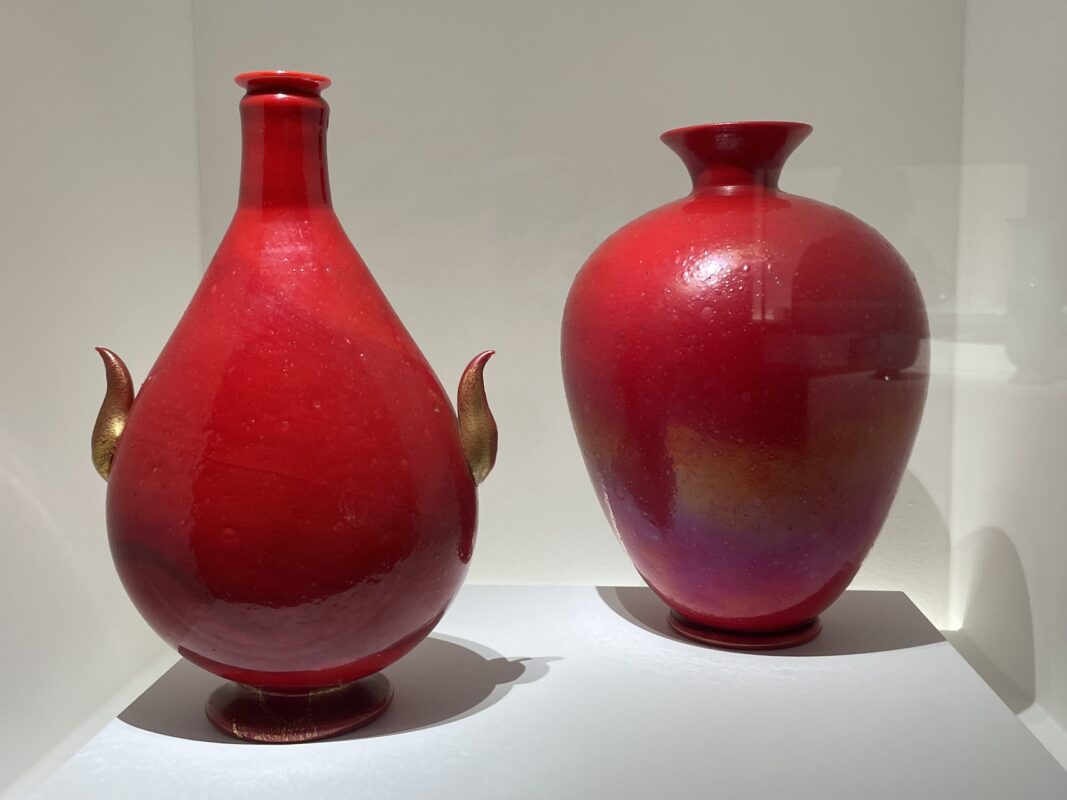
Art glass at the Biennale, amid stories of furnaces and innovations. The new chapter of the exhibition set up at Le Stanze del Vetro on the Island of San Giorgio Maggiore in Venice, titled “1932-1942 Murano Glass and the Venice Biennale,” is dedicated to the years that saw the furnaces collaborate with artists and designers such as Carlo Scarpa, Flavio Poli, Dino Martens and Mario De Luigi to present their best production to the famous Venetian institution. The new exhibition, curated by Marino Barovier, open until Nov. 23 thanks to a Project of Fondazione Giorgio Cini onlus and Pentagram Stiftung, and part of the proposals of The Venice Glass Week (read here), examines the years corresponding to the inauguration of the Venice Pavilion and the last edition of the Biennale before the interruption due to World War II. Beginning in 1932, Murano glass was present at the exhibition in a dedicated space, built specifically to house the decorative arts thanks to the synergy between the Biennale entity and the Istituto Veneto per il Lavoro. The value and quality of the so-called minor arts were thus officially recognized, and at the exhibition they were selected to be shown to the general public.
Circle4Change: a tree in Venice by bicycle

It’s not every day you see a five-meter-tall tree moving on its own, even less transported by bicycle. This surreal spectacle did not go unnoticed by those who, last July, saw a small caravan of bicycles passing over the Ponte della Libertà, heading toward Venice, with precisely one pedal-assisted bicycle at the head carrying a plant with an imposing 6oo-pound stem. Pedaling it was Bruno Doedens, a Dutch architect turned land art artist, who with his “Circle4Change” project will ride more than 5,ooo kilometers every three years in a circular fashion through different states of Europe to raise awareness among the people he meets on his way to change their lifestyles and plant trees.
«The goal is to turn this distance traveled into opportunities for people, organizations, artists, municipalities, and businesses to come together to promote on the one hand an increase in awareness of the importance of having as many trees as possible to limit the effects of climate change by mitigating pollution and on the other hand to take direct action by planting them!» the artist explains. Starting from Leeuwarden in the Netherlands at the end of the journey, which moves along an imaginary circumference, Bruno will eventually have traveled through the Netherlands, Germany, Poland, the Czech Republic, Austria, Slovenia, Italy, France and Belgium, having as opposite poles just his own city, already European Capital 2018, with Gorizia and Nova Gorizia, Capitals 2025 joined across their old border Italy and Slovenia.
